
Binding guides
Choose the right binding before you impose or print
Different zine bindings change your page order, your safe margins, your paper limits, and the way the finished object opens. These guides help you choose the right structure before you commit to print.
Core binding methods
Fold + staple
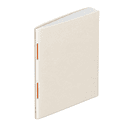
Saddle stitch
The classic zine binding: folded sheets nested together and stapled through the spine.
Japanese pouch binding
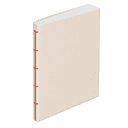
Fukuro-toji
A traditional folded-leaf binding where each sheet becomes a pouch and the open edges gather at the spine.
Glued spine
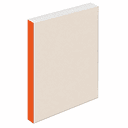
Perfect binding
A flat stacked text block glued at the spine, suited to thicker books that need a squared-off finish.
Side-sewn stack
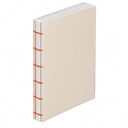
Japanese stab binding
Flat sheets stacked and sewn through a line of holes near the spine edge.
Exposed spine sewing
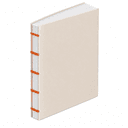
Coptic binding
Signatures linked with exposed chain stitches so the book can open flat without a glued spine.
Machine-sewn fold
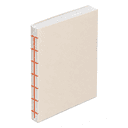
Singer sewn binding
A continuous machine-sewn line through the center fold for a clean, flexible alternative to staples.
Hand-sewn booklet
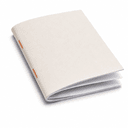
Pamphlet stitch
A simple three- or five-hole hand stitch through one folded section, ideal for a first sewn zine.
Exposed long stitches
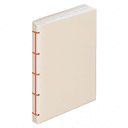
Long stitch binding
Signatures sewn directly through a cover with long, visible stitches running along the spine.
Double-thickness leaves
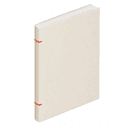
French fold
Sheets folded so each leaf has a closed outer edge and two layers, creating opacity and hidden inner surfaces.
Sculptural structure
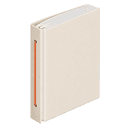
Tunnel / flag book
Accordion supports hold panels or flags in space, turning sequential pages into a dimensional object.
Gathered signatures
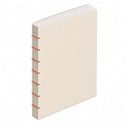
Section sewn / signatures
Folded signatures sewn through their folds and gathered into a strong, flexible multi-section book.
Continuous folded strip

Accordion / concertina
A continuous strip folded into alternating panels that reads page by page or opens into one long composition.
Binding selector
Choose a binding from production constraints
Set page count, paper weight, opening and printer. The recommendation follows the same physical constraints used when Kumizine validates a project.
Recommended starting point
Saddle stitch
This page count and stock remain practical to fold and staple at home.
Read the binding guideQuick comparison
Start here if you are comparing structure, not aesthetics. The practical differences below are what usually change layout decisions.
| Style | Construction | Typical fit | Best for |
|---|---|---|---|
| Saddle stitch | Each sheet prints as a spread, folds in half, and nests inside the next sheet. Two or three staples clinch through the center fold to hold the whole booklet together. | Short booklets | Short zines and booklets |
| Fukuro-toji | Sheets print single-sided, then fold in half so the printed face sits outward. The folded edge becomes the fore-edge and the raw open edges align at the binding side. | Specialty structures | Japanese-inspired artist books |
| Perfect binding | Individual sheets stack flat in reading order. The spine edge is prepared and adhesive holds the pages together, usually under a wraparound cover. | Higher page counts | Thicker zines and books with a real spine |
| Japanese stab binding | The pages stay flat rather than folded. After printing, the stack is aligned, punched or drilled through a row of holes, and sewn through a decorative side-stitch pattern. | Specialty structures | Decorative visible stitching |
| Coptic binding | Fold the pages into small signatures, pierce matching sewing stations through every fold, and link each section to the previous one with chain stitches. | Specialty structures | Lay-flat photographic spreads |
| Singer sewn binding | Imposed sheets are folded and nested, then sewn through the center fold with a suitable sewing machine and thread. | Specialty structures | Short-run studio editions |
| Pamphlet stitch | Fold and nest the imposed sheets as one signature, pierce three or five stations along the fold, then sew between them and tie the ends around the long center stitch. | Specialty structures | A first hand-bound zine |
| Long stitch binding | Each signature is pierced through its fold, while corresponding slots or holes are cut into the cover. Thread passes through the signature and cover to create the exposed vertical pattern. | Specialty structures | Several folded signatures |
| French fold | Each sheet is printed on one side and folded so the printed panels face outward. The open edges gather at the spine and can be sewn, stapled or otherwise bound. | Specialty structures | Opaque double-thickness leaves |
| Tunnel / flag book | A tunnel book fixes layered panels between two accordion-folded side strips. A flag book attaches individual panels across alternating mountain and valley folds of an accordion spine. | Specialty structures | Dimensional visual narratives |
| Section sewn / signatures | Pages are imposed within separate signatures, often sets of two, three or four folded sheets, rather than across the entire publication as one unit. Each section is sewn through the fold and the gathered sections are linked or supported at the spine. | Specialty structures | Longer multi-section zines |
| Accordion / concertina | Panels are laid out in a continuous row and folded in alternating directions. Longer works join multiple strips with carefully placed overlaps before folding. | Specialty structures | Panoramas and continuous narratives |
Keep planning the print workflow
Once you know the binding direction, the next decisions are usually page order, duplex setup, and template choice.